Get cleaner cutouts by preparing the source image and checking edges after background removal. The goal is not to chase the smallest possible file or the fanciest format. The useful result is the one that stays readable, opens correctly for the recipient, and solves the upload, sharing, or publishing problem you actually have.
When this matters
This topic usually comes up when a file is rejected by an upload form, loads slowly on a website, is too large for email, or is difficult for someone else to open. Before changing the file, decide what the receiver needs: a smaller file, a different format, separate pages, or a cleaner visual result.
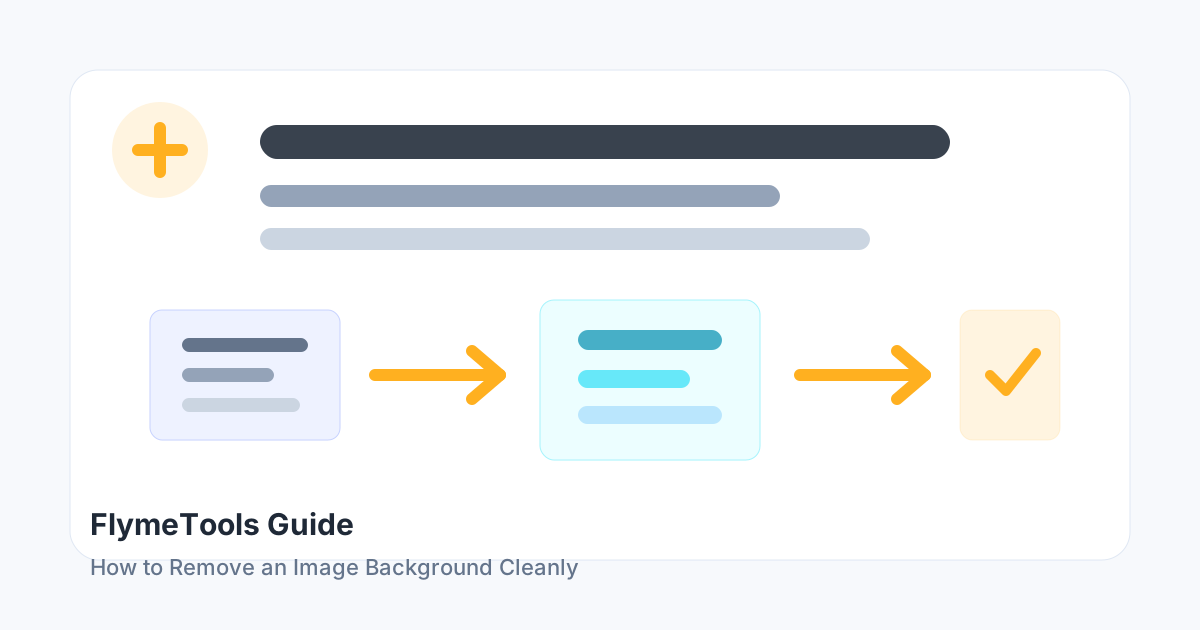
Step-by-step
- Choose a source image with good lighting and a clear subject.
- Run the background remover.
- Download the transparent PNG result.
- Place it on the target background and check the edges.
What to check before you send it
- Use a clear subject with contrast from the background.
- Avoid tiny, blurry, or heavily compressed source images.
- Check hair, transparent objects, and product edges after processing.
- Keep the original file until the recipient confirms the new version works.
Try it with FlymeTools
Use the Remove Background tool to apply this workflow directly in your browser.
Open Remove BackgroundCommon mistakes
The most common mistake is using the strongest setting or conversion option first. That can create unnecessary quality loss or make the result harder to use. Start with the least destructive option, inspect the output, and only go further when the file still does not meet the requirement.
FAQ
What images work best?
Images with clear subject edges and good contrast usually work best.
Why do some edges look rough?
Hair, glass, shadows, and low-resolution images can be difficult for automatic tools.
What file format should I download?
PNG is best when you need transparency.